How Much Life Insurance You Need
Social Media
Life
 • 11 min read

 James Merrifield


 • 11 min read
Americans are overconfident and underprepared for an unexpected death in the family, according to a recent USAA survey of more than 2,000 respondents. While the majority (74%) said their loved ones would be financially secure in the event of their death, 40% said their family wouldn't be able to afford basic living expenses for more than a year.
The reason? Less than half (46%) of Americans have life insurance.
Life insurance is a financial safety net for your loved ones in the event of your untimely death. A thorough policy can replace your income and provide enough money to cover funeral costs, debt repayment and future investments, as well as day-to-day living expenses.
"It's important to protect your family today, so that if the unexpected happens, their primary focus can be supporting one another," Carter continued.
No one likes to talk about untimely death — in fact, Americans feel more comfortable talking about politics (68%) than end-of-life planning (62%), the USAA survey found. But it's important to analyze your finances while you're healthy, so you can leave your family with a life insurance payout that can replace your income if you die suddenly.
Life insurance should cover the cost of your funeral and leave your family with enough money to cover living expenses and debt repayment. While a common rule of thumb is to take out a policy size that's 10 to 15 times your annual income, there are some considerations to keep in mind.
The amount of life insurance coverage you need depends on several factors. Sit down with your monthly budget and ask yourself these questions about your financial obligations:
Next, you'll want to calculate your insurance needs by adding your financial obligations (mortgage payment, child care costs, burial expenses, student loans, credit card debt) and subtracting your assets (savings, investments, existing life insurance policies). Here's an example:
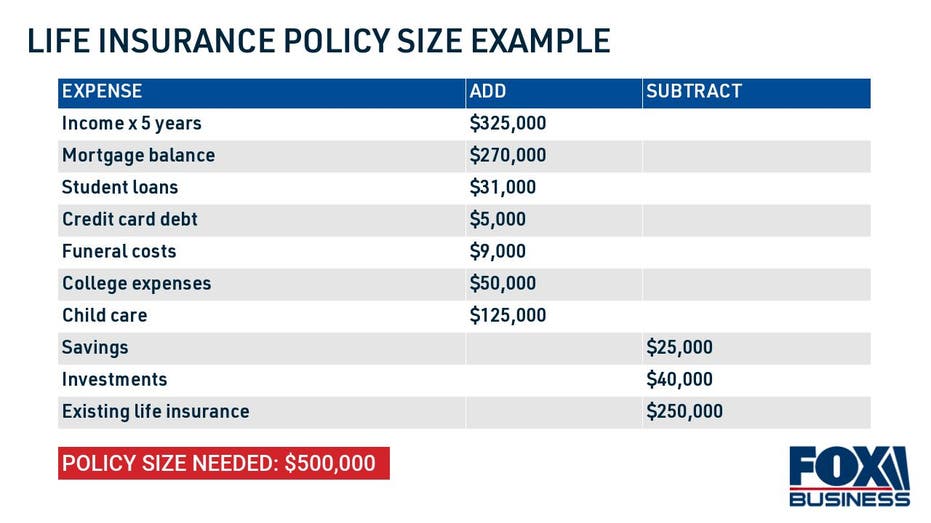
In addition to assessing your coverage needs, it's important to compare the different types of life insurance, including term policies and whole life policies. Weigh the pros and cons of each below.
A term policy is the traditional type of life insurance. You take out a policy that lasts a certain period of time, typically 10 to 30 years. If you die before the term expires, your beneficiaries receive a payout.
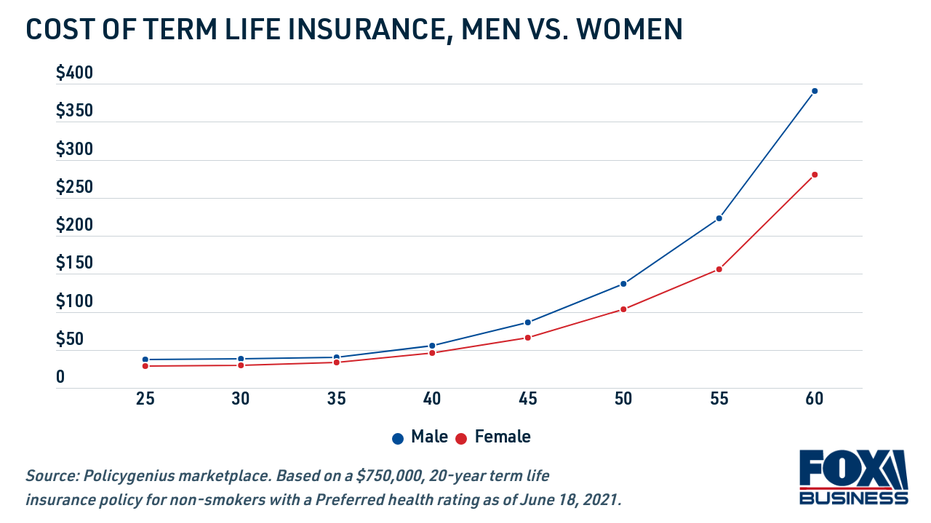
Term life insurance policies are relatively affordable, especially if you enroll while you're young and healthy. The cost of life insurance rises as you get older and your health deteriorates.
Also known as permanent life insurance, whole life insurance is a policy that doesn't expire until you die. It has a guaranteed cash value, and you can access payouts while you're still alive. Whole policies are much more expensive than term policies, but they're seen as an investment due to the resources provided.
Author: Erika Giovanetti
Source: © 2021 FOX News Network, LLC
Retrieved from: https://www.foxbusiness.com/
FINRA Compliance Reviewed by Red Oak:1921133